
Courses 1-4
Courses 1-4 of Te Rito focus on fundamental bicultural competency. These 14 modules were updated in 2024. All fourteen modules follow the same structure:
- Introduction of key concepts
- Examples of these concepts in New Zealand life, particularly in the workplace
- An interactive tool to provide the opportunity to master the new concepts and skills, and
- A brief learning assessment quiz that must be passed in order to complete the module.
“Ngā mihi. I feel more grounded and at peace with my own ethnicity and culture after completing this course. I am also more confident about communicating with Māori and looking to ask and learn from and with them.”
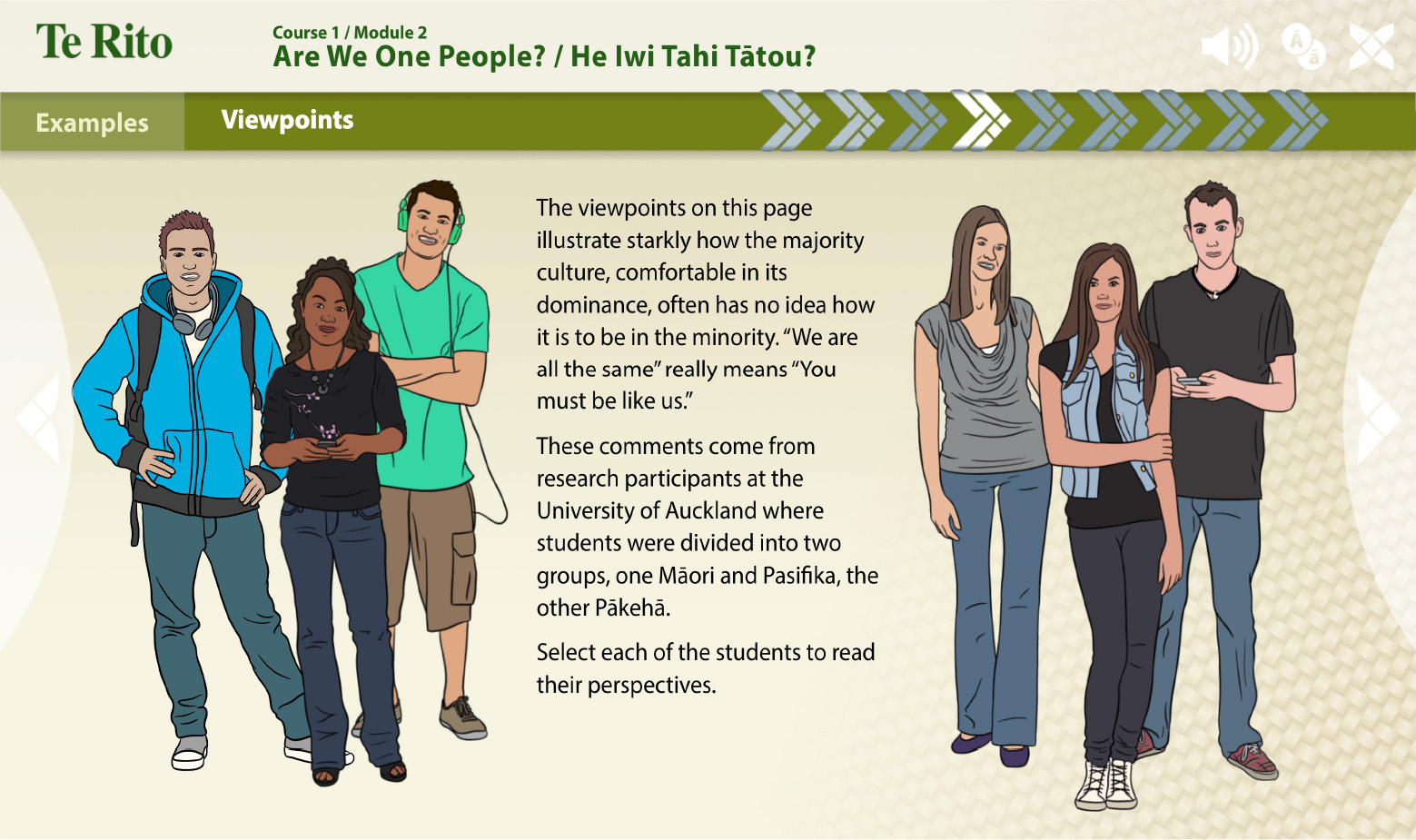
In Course One, we get to know Te Rito and how it works, and become familiar with terminology relating to culture, assimilation and its effects. We explore the idea that we are ‘one people’ in Aotearoa and listen to viewpoints on this issue.
Course Two introduces four building blocks of Māori worldviews: whakapapa, wairuatanga, mana, and kaitiakitanga. The core values and ways of living that derive from these ancestral concepts are explained, and examples are given of how tikanga manifests in the workplace and in daily life.
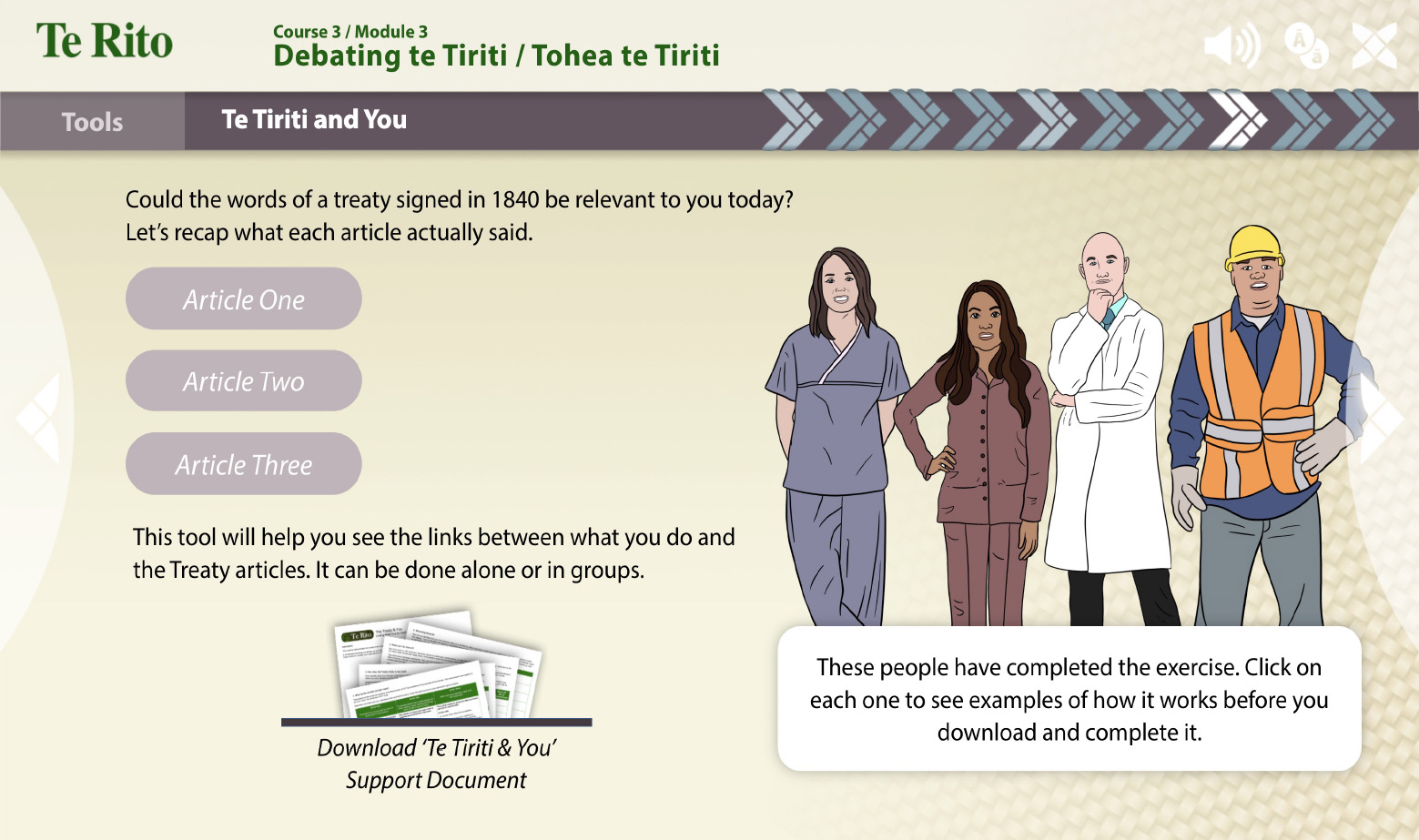
In Course Three, we turn to Te Tiriti o Waitangi, paying close attention to the context in which it emerged and the many factors impacting on iwi Māori at that time. Te Tiriti is explored over time, including focus on the Crown’s continuous breaches, and its purposeful disregard of its promise to respect te tino rangatiratanga. Many perspectives are highlighted. Learners are guided in how to connect their own work with our foundational document, showing it is a living and breathing taonga that can serve as a practical template for equity and harmony.
“I really liked that the history and experiences of Maori pre- during and post dealing with the Crown and missionaries was covered in that amount of depth. While I have had lots of teaching at school and some at work about Te Tiriti o Waitangi and its implications, this is the first time I really got to understand more of the background to it and what happened in the process of signing. Ka pai and ngā mihi.”
“I really liked hearing different voices and opinions on Te Tiriti and history, as I often do not feel well equipped to respond to some of the opinions I hear voiced in my day to day life and this has helped. I learned some new information as well that I had not previously known, such as the material about the Declaration of Independence.”
In the final course of these foundational modules, Course Four, learners become aware of the meaning behind the rituals of encounter and transition treasured by iwi Māori, increasing their confidence to participate in them with true understanding.
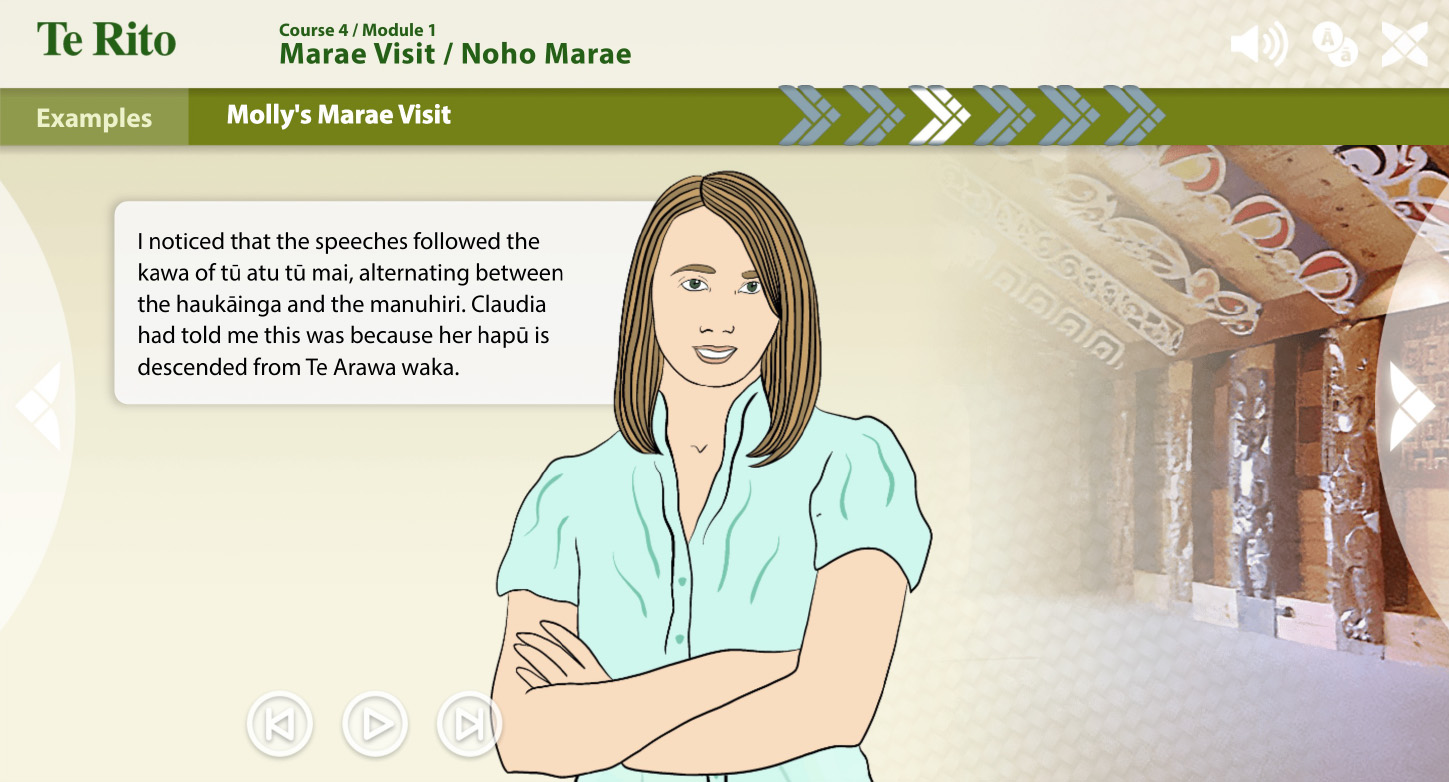
Along the way, learners build new skills by – among other things – learning how to introduce themselves, contribute to ceremonial occasions with waiata tautoko, and understand the role of karakia in bringing people together. There are also opportunities to learn basic te reo Māori and pronunciation.
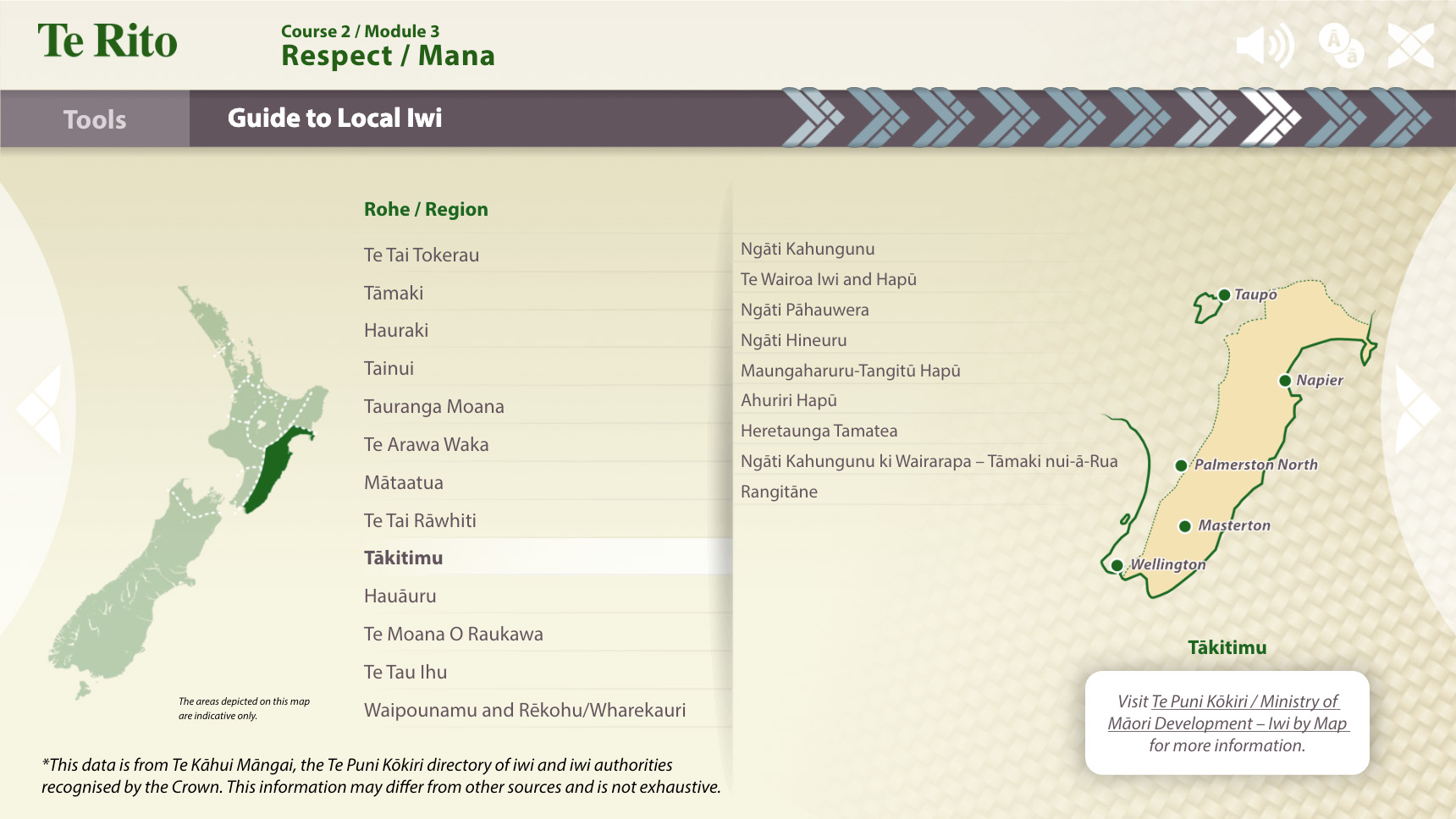
Our learners report greater confidence in applying their new bicultural fundamentals.
“What I found best was being able to listen to words ..and practicing them. The more you listen to the way words are said and the flow of the language the less scared I am of mucking something up. I am now introducing myself and saying goodbye after treatment to my Māori patients with confidence (and sometimes a smile from my patients).
“What has happened is that because I am trying, we are talking more during treatments…I am learning more about the local culture but also I have found that the patients are more willing to do the home programs/treatments plan…guess it is all about trust and building relationships…thanks :)”